
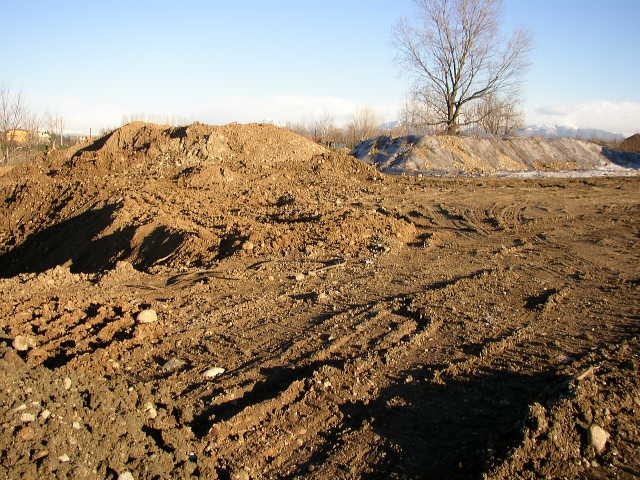
The management and disposal of contaminated land is one of the most complex challenges in the field of construction waste. During excavation and construction activities, soil and rocks from construction sites may contain pollutants that require specific treatment before disposal or reuse.
To ensure proper management, environmental regulations have strict procedures for classifying, treating, and delivering these materials to authorized landfills or remediation facilities. In this article we will analyze the management cycle of contaminated soil and rocks, from their identification to final disposal, deepening the regulatory obligations and the solutions available for environmental protection.
Classification of excavated earth and rocks
Before proceeding with the disposal of contaminated soils, it is essential to classify them according to current legislation. The classification is based on the concentration of pollutants present and their dangerousness.
- Uncontaminated soil and rocks
If chemical analyses show that the material does not exceed the contamination thresholds established by the legislation, the soil can be reused directly on other construction sites or on the site itself, without special treatments.
- Non-hazardous contaminated soil and rock
If the soils contain pollutants, but in concentrations that do not qualify as hazardous, remediation or controlled disposal processes can be initiated.
- Hazardous contaminated earth and rock
When the level of contamination exceeds the established limits, the soils are considered hazardous special waste and must be disposed of in specific treatment plants or in authorized landfills for hazardous waste.
Legislation on the management of contaminated land and rocks
The management of excavated earth is regulated by several environmental regulations, including:
- Legislative Decree 152/2006 (Consolidated Environmental Act) which regulates waste management and environmental remediation;
- Ministerial Decree no. 161 of 10 August 2012, which establishes the criteria for the reuse of excavated earth and rocks;
- EU Regulation No. 1357/2014, which classifies waste according to its hazardousness.
Treatment and remediation processes
Once classified, contaminated soils and rocks must be subjected to specific treatments to reduce or eliminate the presence of pollutants.
- Biological treatment
Mainly used for organic contaminants such as hydrocarbons and solvents, it involves the use of microorganisms to degrade harmful substances.
- Chemical-physical treatment
It involves the use of chemical reagents to immobilize or neutralize pollutants. Among the most common techniques are stabilization/solidification and chemical oxidation.
- Soil washing
It consists of separating the contaminated fraction by water and chemical agents, reducing the volume of waste to be disposed of.
- Encapsulation and landfill disposal
If in-situ treatment is not practicable, the material is delivered to authorized landfills, where it is encapsulated to prevent the dispersion of pollutants into the environment.
In situ and ex situ remediation
There are two main approaches to remediating contaminated land:
- In situ remediation: consists of the direct treatment of contaminated soils without their removal from the site. Among the most widely used techniques are bioremediation (use of bacteria for the degradation of pollutants), soil vapor extraction (extraction of volatile contaminants) and solidification/stabilization.
- Ex situ remediation: involves the removal of contaminated soil and its treatment in a dedicated plant. It is a more expensive but effective solution for heavily polluted sites.
Disposal and reuse
After treatment, the soils can be reused or disposed of in the following ways:
- Reuse in construction: If reclaimed, the earth can be used for the construction of road foundations or filling.
- Transfer to recovery plants: In some cases, treated earth can be transformed into reusable materials, such as aggregates for construction.
- Landfill disposal: If the soils are still contaminated after treatment, they must be disposed of in special landfills for special waste.
Costs and responsibilities of disposing of contaminated land
The cost of disposal depends on several factors, including:
- Type of contamination: Soils with high levels of pollutants require more complex and expensive treatments.
- Quantity of material to be treated: costs increase proportionally to the amount of contaminated land to be managed.
- Final destination: landfilling for special waste has higher costs than reuse after remediation.
The responsibility for management lies with the producer of the waste, i.e. the company that generates the excavated earth. It is essential to rely on specialized operators to ensure compliance with regulations and reduce environmental risks.
Managing contaminated land requires a responsible and environmentally compliant approach to ensure the safety of soil and groundwater. Adequate planning and the involvement of qualified professionals make it possible to minimize the environmental impact and to enhance resources through recovery and reclamation processes.
Compliance with regulations and the adoption of innovative technologies are essential to ensure effective and sustainable management.
To learn more about the topic and learn about the services available for the treatment and disposal of excavated earth and rocks, visit the dedicated section on our website.