To date, about 17.5% of the recycled paper collected throughout Europe is exported to Asia, mainly to China. It is, therefore, clear that the ban on the import of low-quality recycled paper decided in recent weeks by Beijing turns out to be a real problem for European countries, including Italy.
Import blockade: what consequences for Italy?
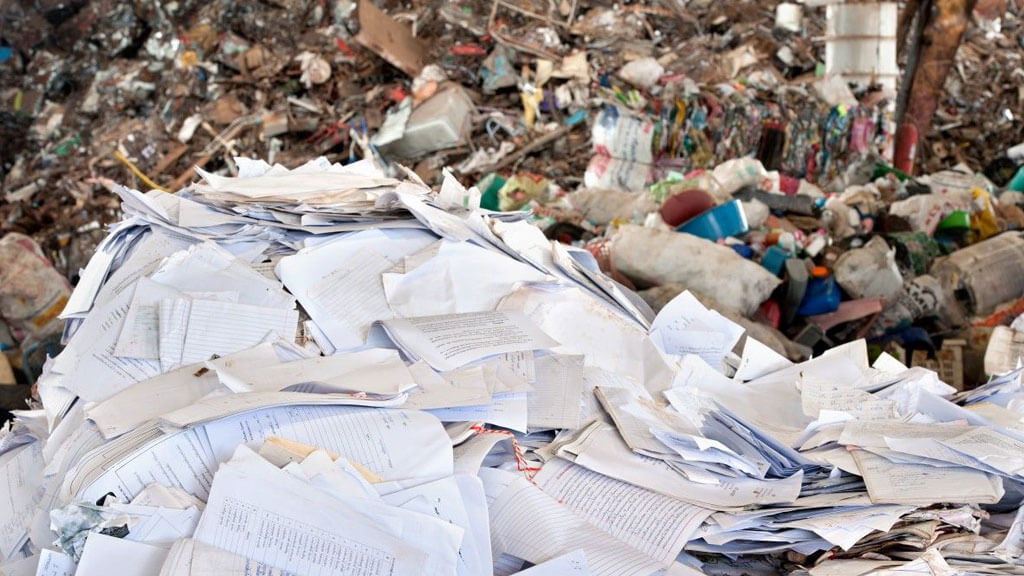
China’s decision has had heavy effects on the paper sorting system in our country. Italy, in fact, has suddenly found itself having to deal with a large amount of waste paper (paper already used that is reintroduced into the production cycle) and with a consequent collapse in prices that affects the economic system.
In light of the facts, the main question is how surplus recycled paper is recovered. The problem is not easy to deal with because both Italy and Europe collect much more paper than they then reuse; This is why exports are an important solution. Suffice it to say that, according to Il Sole 24 Ore, 1.9 million tons of recycled paper are exported from Italy per year.
Assocarta’s opinion and possible solutions
What could be, therefore, the possible ways out for Italy following the decision deliberated by China? Assocarta (the Association that represents and protects Italian paper companies) intervened on this delicate situation: “It is important that paper collection systems are improved and that plants are built to recover recycling waste”.
However, the issue is not so simple as it is necessary to act on several fronts. First of all, an education and instruction path should be implemented aimed at citizens so that they seriously carry out efficient separate waste collection, avoiding throwing recyclable paper in undifferentiated bags. In addition, it would be necessary to improve the waste collection and selection activity carried out by the companies in charge of recovery.
Focusing on high-quality recycled paper
As mentioned, China has blocked the borders for low-quality recycled paper, while it continues to import good quality paper. A possible way out, therefore, may be to commit to transforming all recycled material into good quality paper. In this way, Italian (but also European) paper mills would be incentivized to increase their recycling activity and exports could resume.
The statement of Massimo Medugno, director of Assocarta, falls precisely into this perspective: “China’s new attitude leads to two considerations: first of all, we cannot consider China as our backroom, given that it remains the world’s leading producer of paper with 105 million tons per year against Europe’s 90 million tons. Secondly, Italy and Europe must think about making an industrial policy on recycling: it is not enough to collect paper, we need to do it better and we need to close the circle by building plants to dispose of recycling waste”.